E-commerce Store & Admin Panel for an Online Tyre Retailer
An online tyre store for a company based in France, with a Next.js storefront, a Django backend and an admin panel the company’s team uses to run the business.
Client name, branding and live link are withheld for privacy, and identifying details are removed from screenshots. Happy to walk through this project on a call.

Overview
An e-commerce platform for a company based in France that sells tyres online. The customer-facing storefront is built with Next.js, the business logic and data live in a Django backend, and an admin panel connected to the website lets the company’s team run the store without a developer.
The Problem
Selling tyres online means a large catalogue of very similar products that customers need to browse quickly, and a company team that needs to keep products, prices and orders up to date every day. The company needed a fast storefront and a simple way to manage the business behind it.
Solution
Split the system into a Next.js frontend for a fast, SEO-friendly storefront and a Django backend that serves the data through an API. The admin panel is connected to the same backend, so every change made by the client appears on the website straight away.
Architecture
Key Features
- →Next.js storefront for browsing the tyre catalogue
- →Django backend serving products and orders through an API
- →Admin panel connected to the website for day-to-day management
- →Changes made by the company’s team in the admin panel appear on the storefront immediately
- →French-language storefront for the client’s customers
Gallery
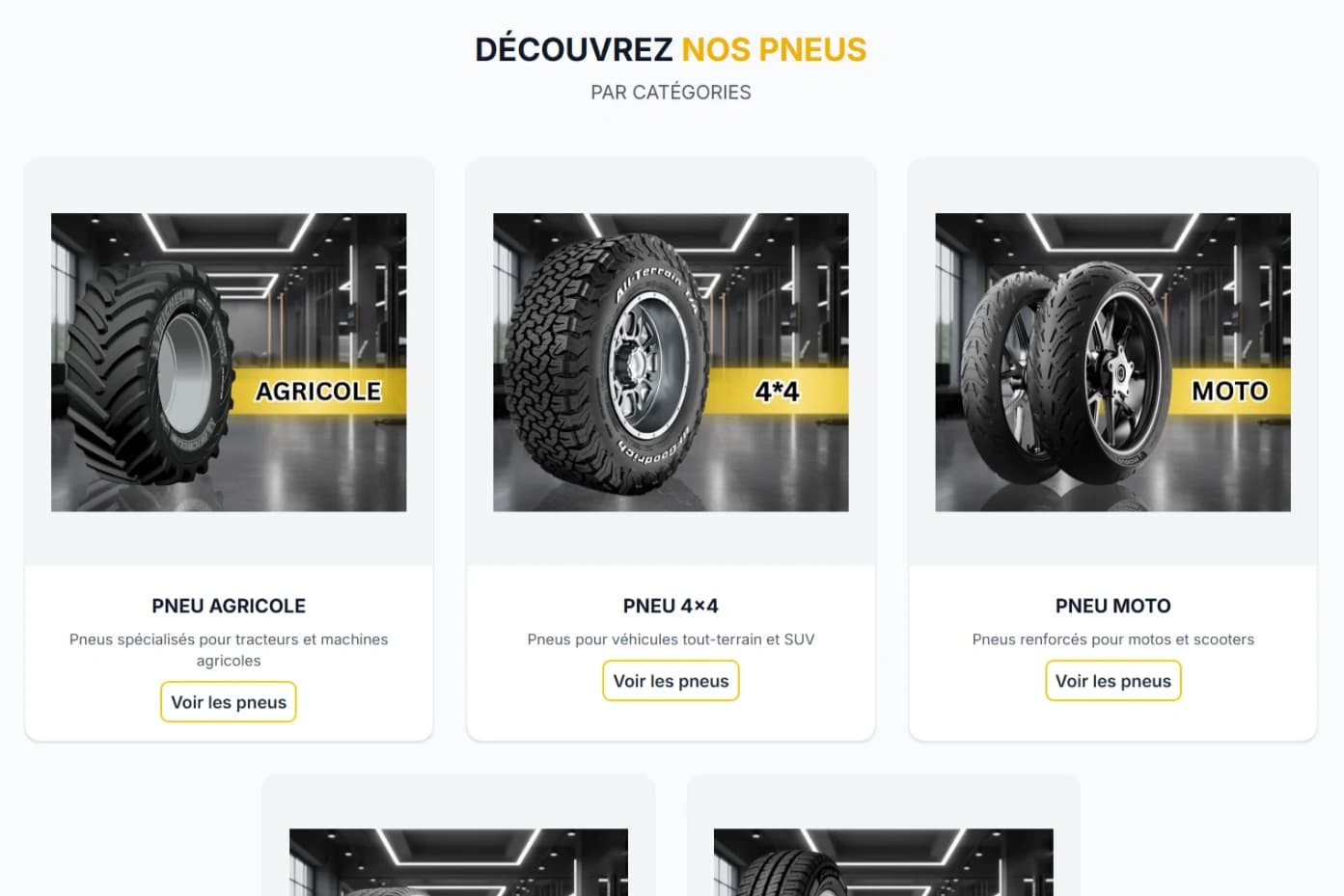
Home page: shop by tyre category (client details removed)
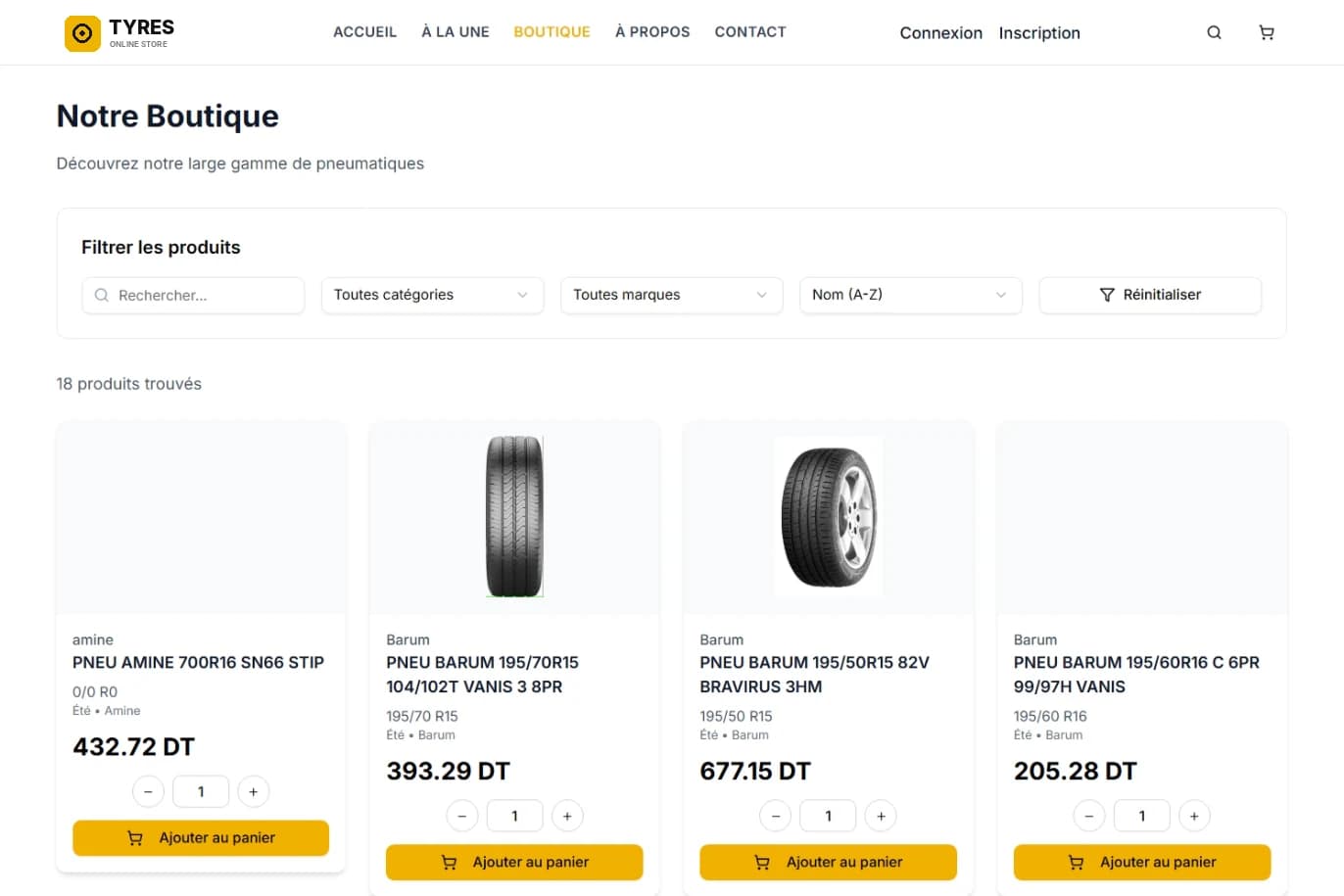
Tyre catalogue with filters and add-to-cart

News and promotions section managed from the admin panel
Tech Stack
Key Decisions & Challenges
Keeping the storefront and admin in sync
The website and the admin panel read and write the same data. Putting all business logic in the Django backend, with both sides talking to it through one API, means there is a single source of truth.
Separating frontend and backend
Running the storefront on Next.js and the logic on Django lets each side be developed and deployed independently, and keeps the storefront fast for customers.
Lessons Learned
- →A clean API boundary between frontend and backend makes a store easier to extend
- →Business teams need admin tools designed around their daily tasks, not database tables
Results
Delivered a working online store with its admin panel to a company in France, whose team manages the business through the admin panel.
Related Projects
Need something similar?
I can build a system like this for your business — tell me what you need and I'll reply with a plan and a quote.